Educational Activity

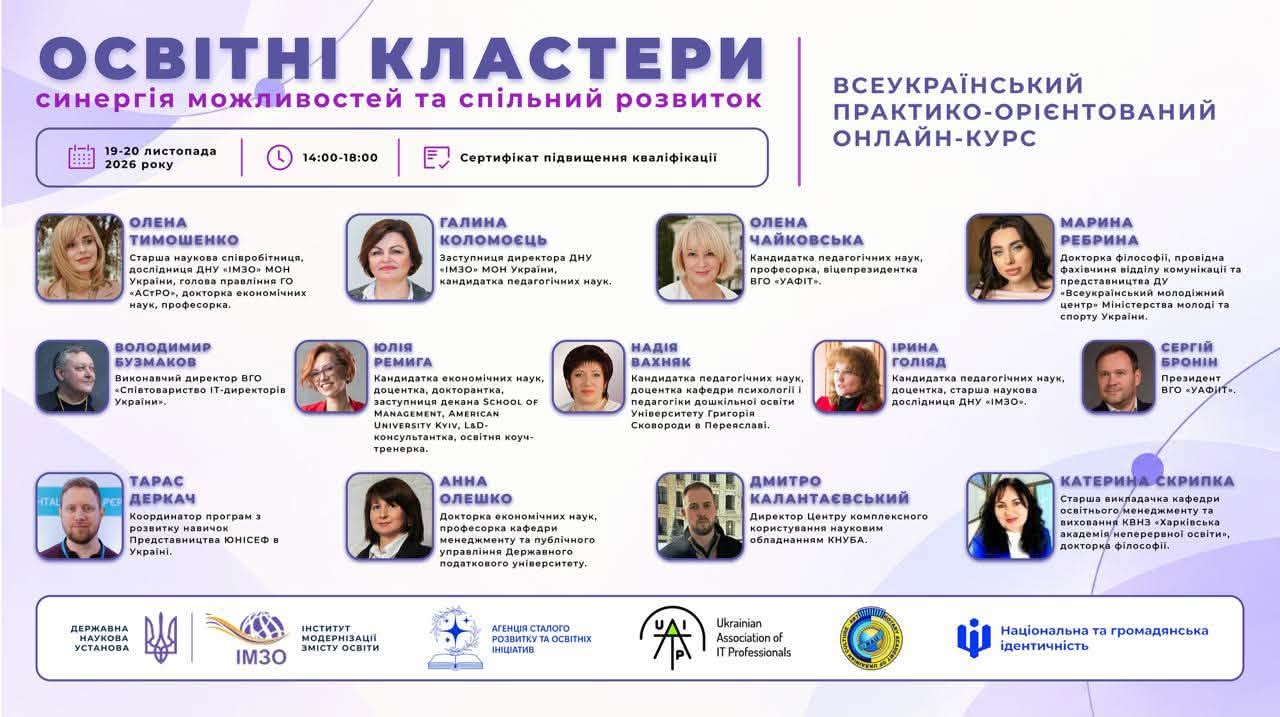
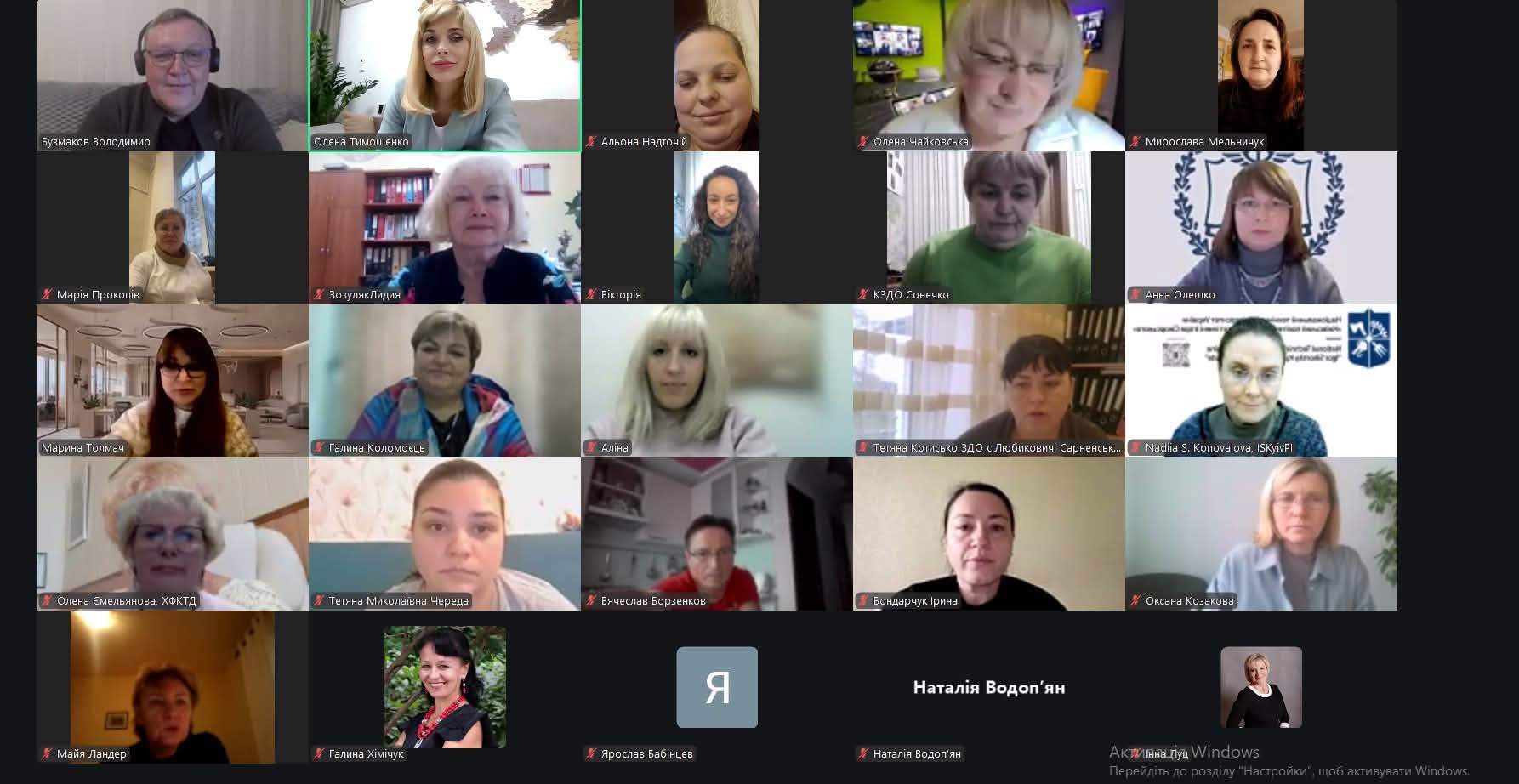
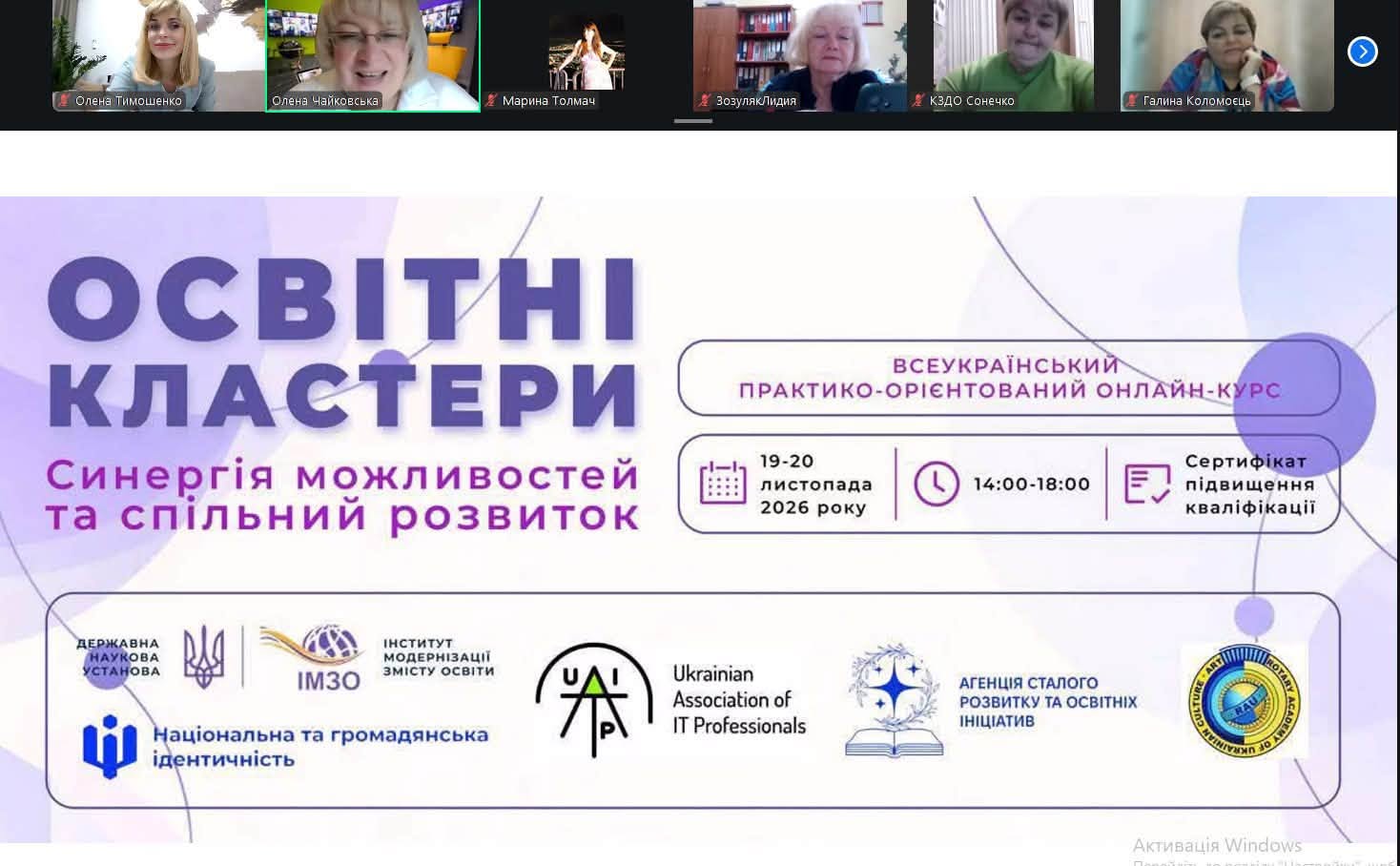
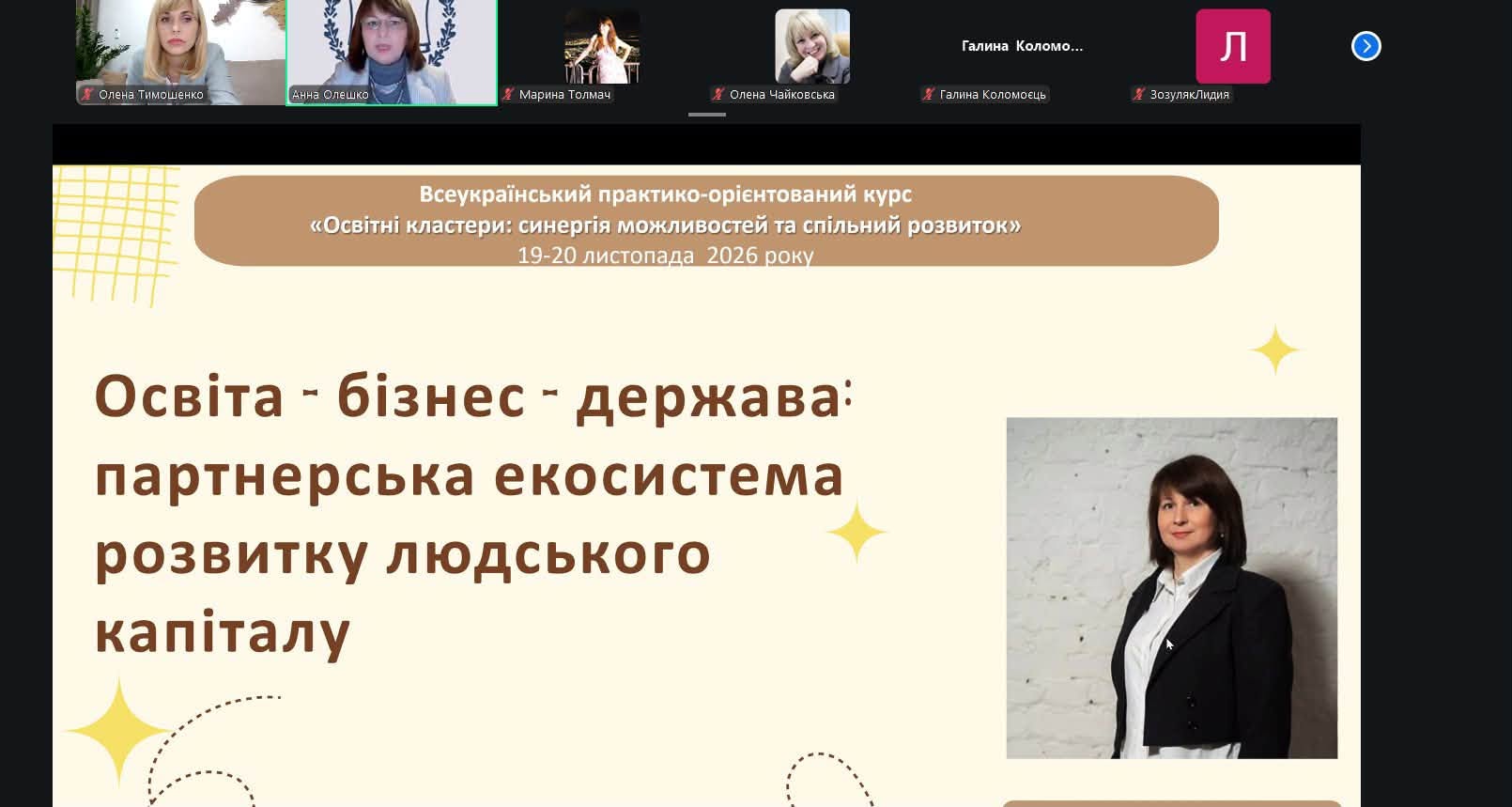
On 19–20 November 2026, the All-Ukrainian practice-oriented course “Educational Clusters: Synergy of Opportunities and Joint Development” took place. It brought together researchers, educators, representatives of the IT sector, business, civil society organisations, and state and international institutions around cooperation, partnership and the joint development of Ukrainian education.
The event was co-organised by the Institute of Education Content Modernization of the Ministry of Education and Science of Ukraine, the NGO “Agency for Sustainable Development and Educational Initiatives”, the educational platform “4 People”, the NGO “Rotary Academy of Ukrainian Culture and Arts” and the Ukrainian Association of IT Professionals.
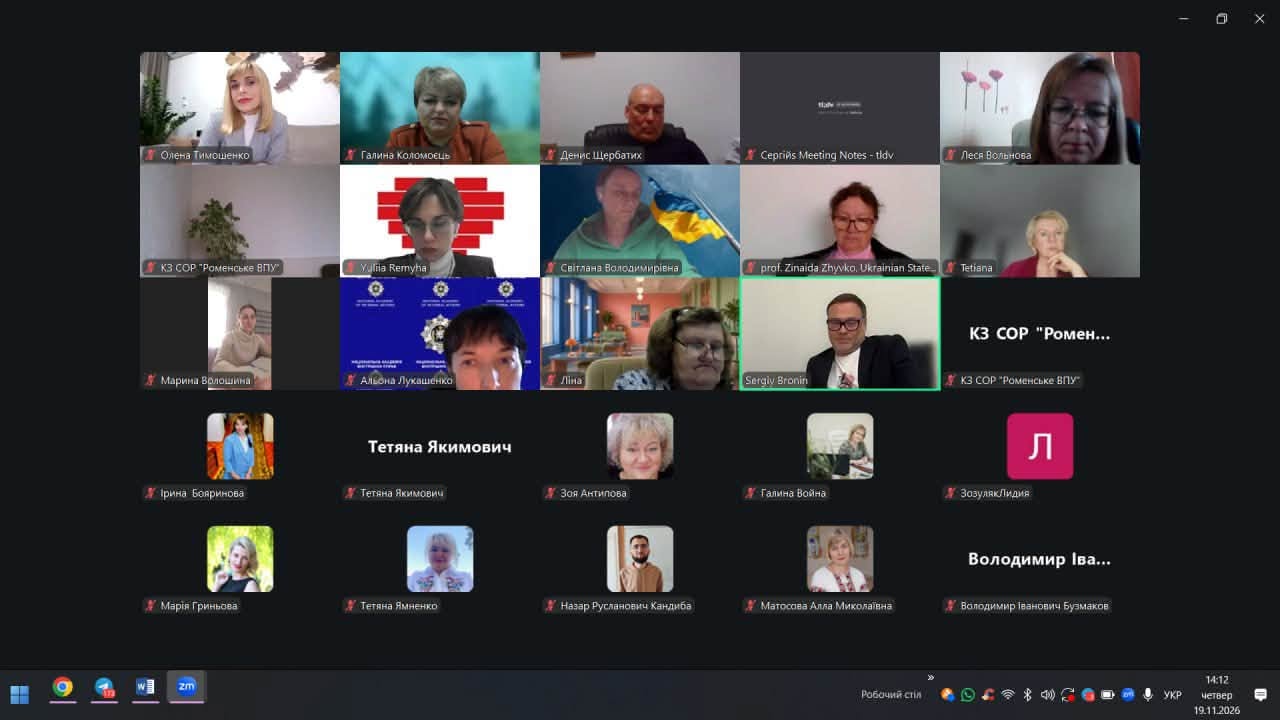
The participants were welcomed by Sergiy Bronin, President of the Ukrainian Association of IT Professionals. He stressed the importance of cross-sector partnership and of bringing the educational and professional communities together, and wished the participants productive work, new professional contacts, a meaningful exchange of experience and success in their joint projects.
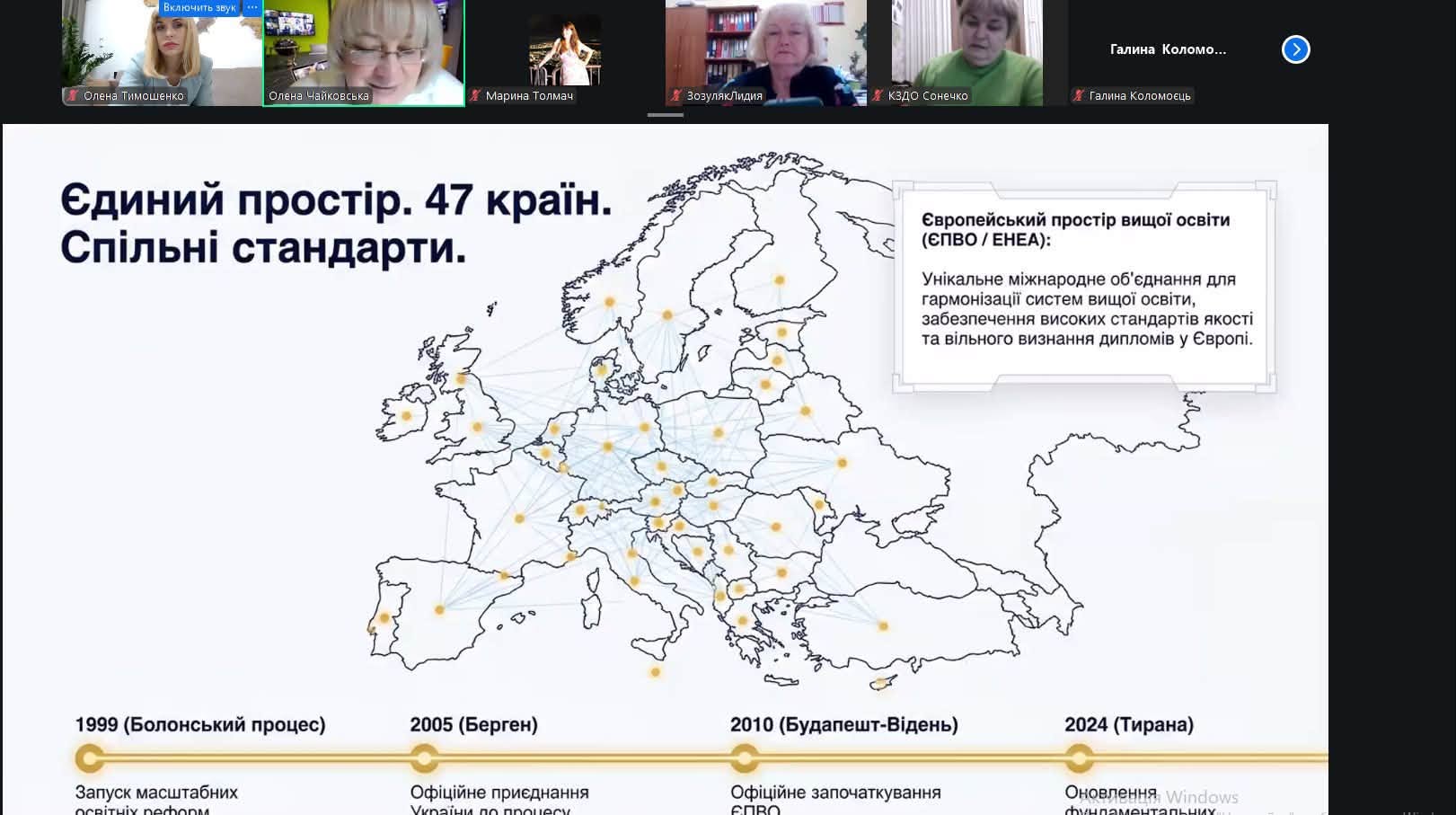
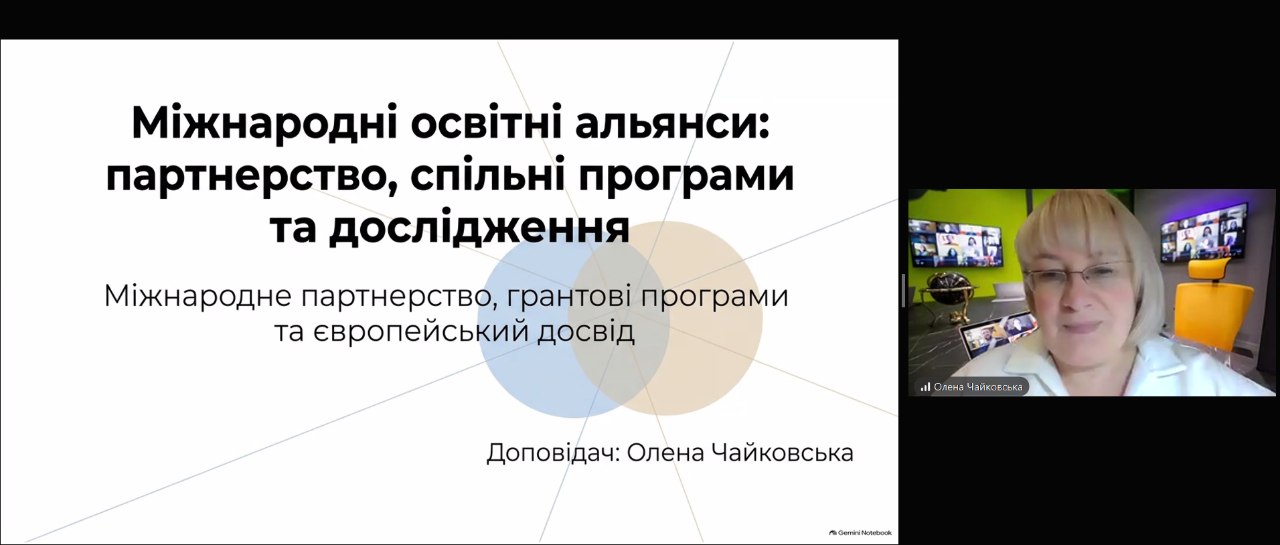
On behalf of the Ukrainian Association of IT Professionals, Vice-President Olena Chaikovska gave a talk titled “International Educational Alliances: Partnership, Joint Programmes and Research”.
The speaker noted that modern education increasingly develops through networking between universities, inter-institutional partnership, academic mobility and joint research initiatives. Educational alliances are becoming an important tool for building a competitive European education area and for integrating Ukrainian educational institutions into international academic networks.
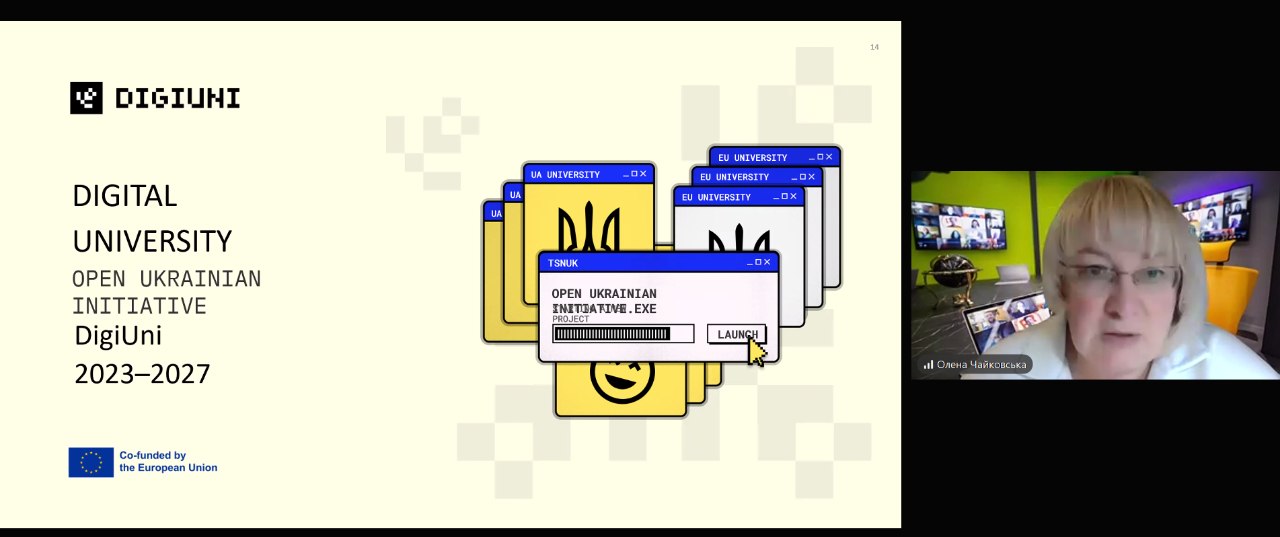
Particular attention was given to DigiUni (“Digital University – Open Ukrainian Initiative”), a large-scale international Erasmus+ project aimed at creating a single nationwide digital education ecosystem for higher education institutions in Ukraine.
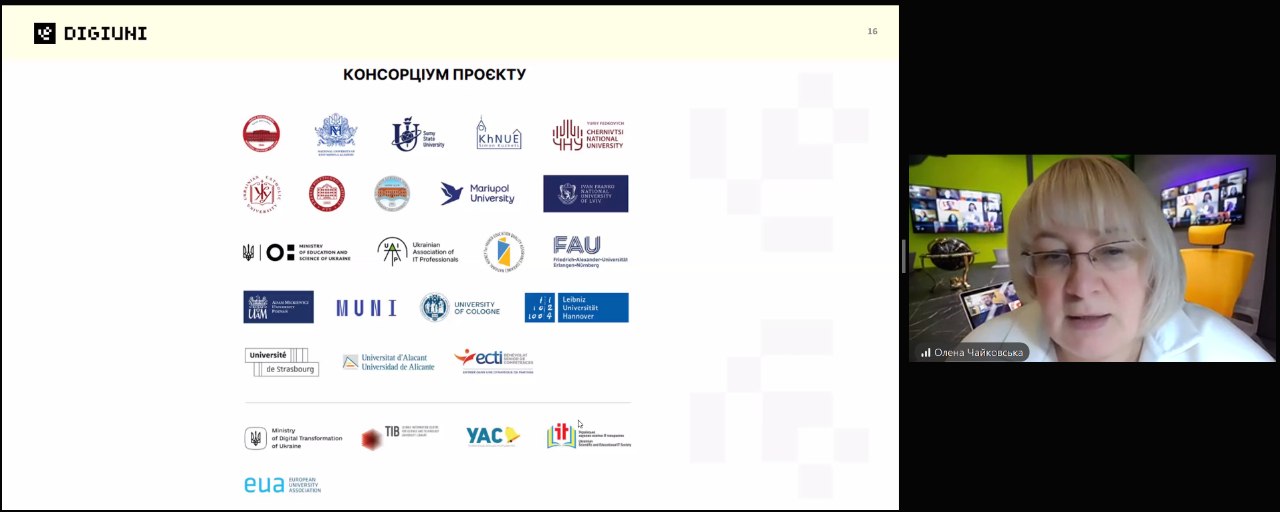
The project responds to the challenges caused by the full-scale war and aims to provide continuous, high-quality and accessible education for Ukrainian students and teachers wherever they are. The consortium has 26 members, including Ukrainian universities, the Ministry of Education and Science of Ukraine, the Ministry of Digital Transformation of Ukraine, the National Agency for Higher Education Quality Assurance, professional associations and leading European partners.
The course participants were introduced to the key results and tools of the DigiUni project:
The Open DigiUni Charter is seen as one of the key steps towards a single digital education space and the development of inter-university alliances on the European model. The document allows Ukrainian higher education institutions to join the digital education ecosystem openly and to develop innovative educational services together.
Olena Chaikovska also presented a successful example of European university integration: the EPICUR (European Partnership for an Innovative Campus Unifying Regions) alliance, which unites universities from nine European countries. The alliance runs joint study programmes, international research and academic mobility, and operates a shared digital space for students and teachers.
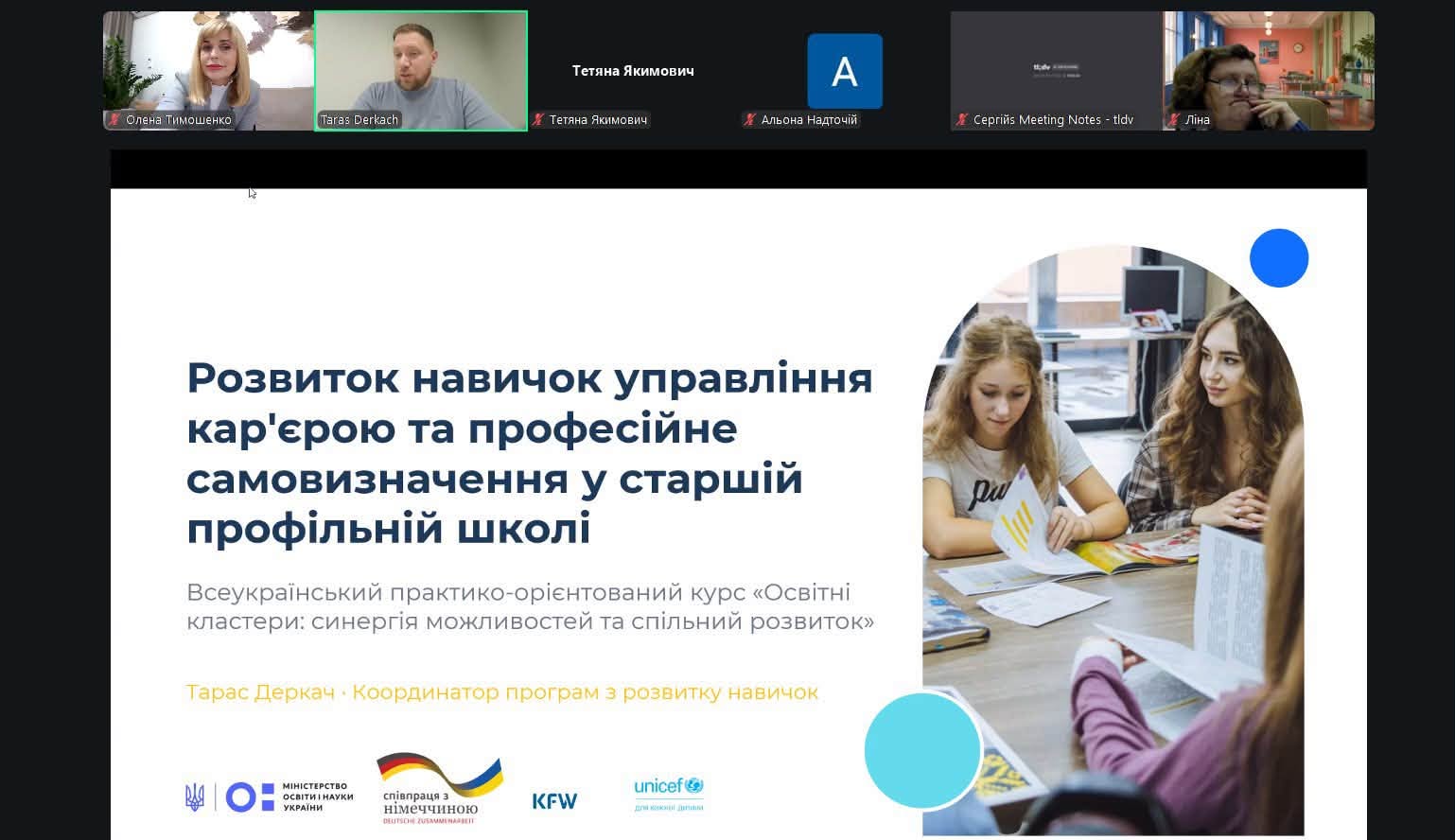
During the course, experts discussed a number of topical issues in modern education, including human capital development, the concept of partnership-based education, support for individual learning paths and career counselling.
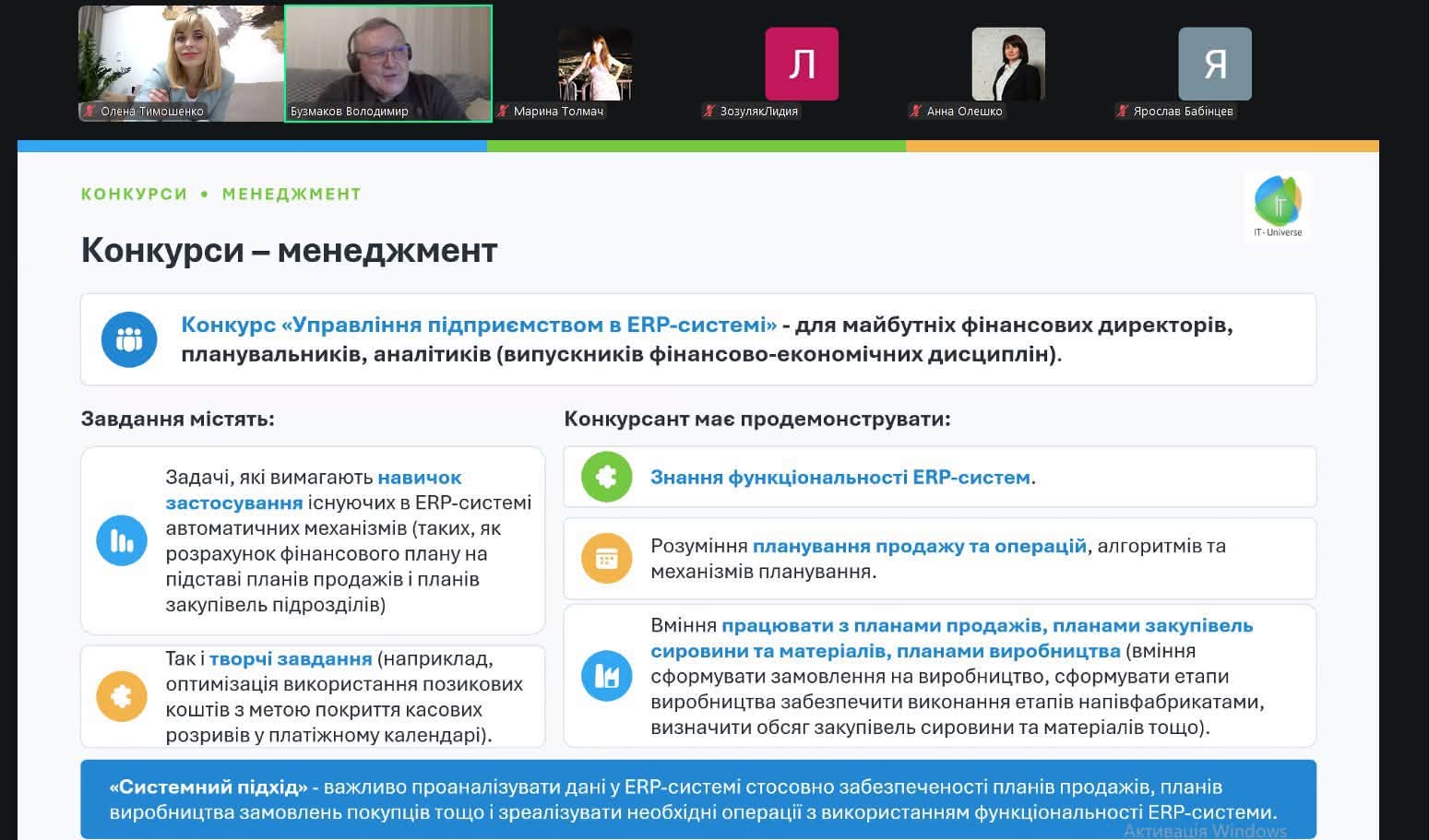
The participants showed great interest in the talk by Volodymyr Buzmakov, Executive Director of the Ukrainian CIO Community, who presented a successful model of cooperation between educational institutions and business as a basis for training competitive specialists for the digital economy. He demonstrated practical mechanisms of interaction between employers and educational institutions that help students build up-to-date competences and succeed professionally.
Volodymyr Buzmakov paid special attention to the international student olympiad “IT-Universe”, which for many years has been an effective venue for developing young people’s professional skills, identifying talented future IT specialists and building cooperation between educational institutions, IT companies and employers. The participants learned about the opportunities the olympiad opens for students, teachers and partner organisations, and about examples of successful cooperation between education and business within this project.
A separate practical initiative was the launch of a networking directory of educational partnerships, designed to help participants find partners for educational and research projects, grant applications, international programmes and new educational clusters.
The participants agreed that the future of Ukrainian education is closely tied to the development of partnerships, digital ecosystems and international educational alliances. Pooling resources, knowledge and professional communities opens new opportunities for modernising education and training specialists able to meet the challenges of the modern world.
Investing in people is the best investment in the future of Ukrainian education, and educational clusters and international partnerships are becoming an effective tool for this development.