Educational Activity

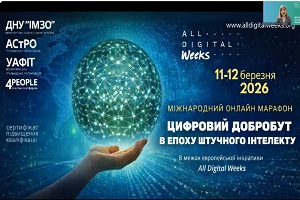
On March 11-12, the International Online Marathon "Digital Well-being in the Age of Artificial Intelligence" took place,
held within the framework of the European All Digital Weeks initiative.
The event was organized by the State Scientific Institution "Institute of Educational Content Modernization" of the Ministry of Education and Science of Ukraine, the "4 People" Educational Platform, the NGO "Agency for Sustainable Development and Educational Initiatives," and the NGO "Ukrainian Association of IT Professionals." Over the two days, more than 340 participants and 24 speakers joined the event in a dynamic format! The event brought together experts, scientists, educators, and professionals from various countries around the world. Representatives from Ukraine, Belgium, Lithuania, Latvia, the Netherlands, and Ireland joined the international dialogue.
The international practical online marathon was aimed at raising educators' awareness of the opportunities and risks of using artificial intelligence, building practical skills for working with AI tools, and exchanging international and domestic experience in the field of digital transformation of education.
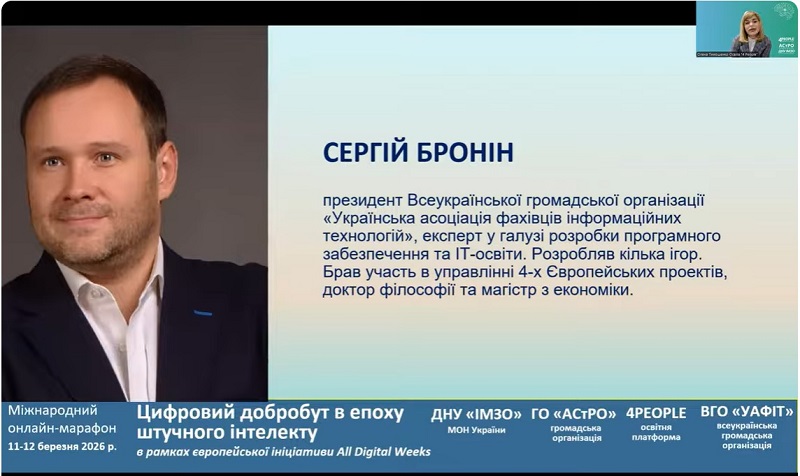
Sergii Bronin, President of the UAIT, welcomed the attendees, noting that the rapid development of digital technologies and artificial intelligence is one of the defining factors in the transformation of modern education and the knowledge economy, and introduced the main themes of this year's All Digital Week campaign:
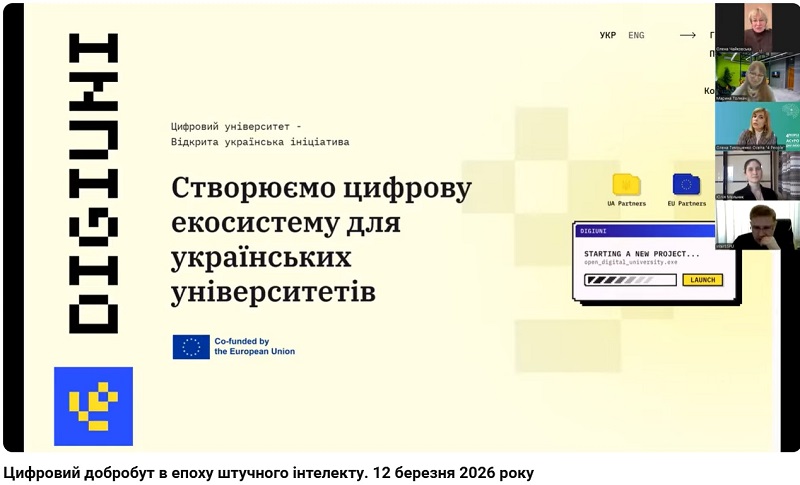
Olena Chaikovska and Maryna Tolmach, members of the UAIT working group for the implementation of the "Digital University – Open Ukrainian Initiative" project https://digiuni.org/en of the international Erasmus+ program, delivered a report on the current stage of the project's implementation and noted that educational systems are in the process of active digital modernization, accompanied by the widespread use of digital platforms, online environments, and artificial intelligence tools in the educational process and the professional activities of educators.
The total duration of the marathon was two days, four academic hours each. The event format featured short, practice-oriented presentations by speakers lasting up to 15 minutes, which ensured a highly dynamic program, clear focus of content, and active involvement of participants in discussing current issues of digital transformation. More than 20 experts in digital transformation across various sectors of the economy presented a wide range of expert positions, domestic and international experience, and practical cases, which will facilitate interdisciplinary knowledge exchange and the formation of a comprehensive vision of the challenges and opportunities of digitalization.
Key topics of discussion included:
digital threats when using artificial intelligence;
ethical and responsible application of AI;
media literacy and digital security;
the impact of AI on the economy and labor markets;
the use of AI tools in professional activities;
digital transformation of education, business, and culture.
The reports from our Lithuanian colleagues were extremely interesting.
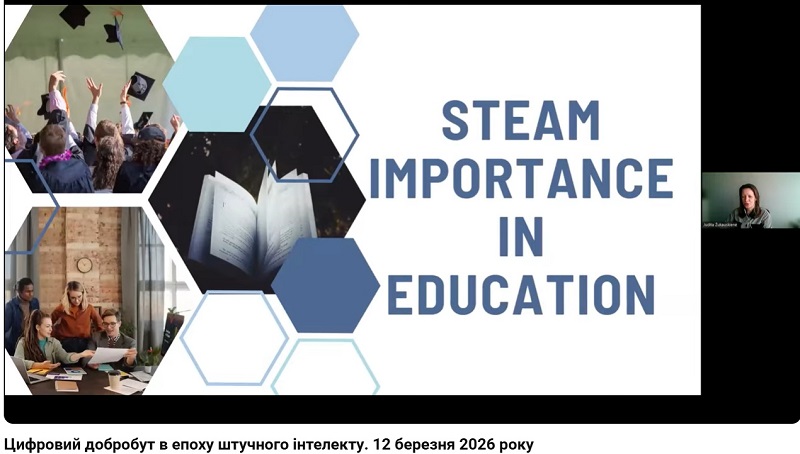
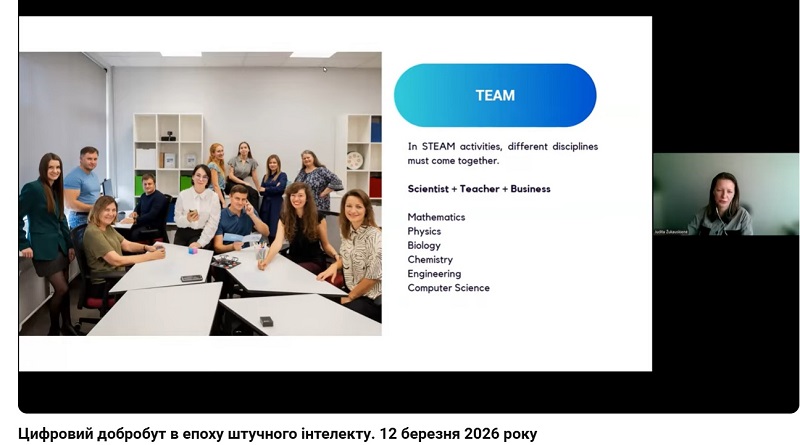
Prof. Judita Žukauskienė, Head of the STEAM Didactics Centre at Vytautas Magnus University, introduced the attendees to the activities of the STEAM Didactics Centre https://www.vdu.lt/lt/steam/, which is a center for innovation in learning and teaching, created to promote creative education in the fields of science, technology, engineering, arts, and mathematics (STEAM). The center offers various methodological training sessions, creative workshops, and classes for teachers and students, aimed at developing modern educational methodologies and conducting scientific research. The main goal of the STEAM Didactics Centre is to develop creative and innovative thinking, strengthen students' skills for the future, and promote the professional development of teachers through the integration of modern teaching methods.
Judita Žukauskienė emphasized that the Center's work is aimed at fulfilling one of the university's key tasks — high-quality training and retraining of educators. Currently, the Center acts as a unique educational environment for professionals, where teachers have the opportunity to improve their professional skills and expand their knowledge in the field of STEAM education. According to Prof. Judita Žukauskienė, the integrative STEAM approach, which combines different disciplines through creative and team-based forms of work, helps pupils and students better understand their own abilities and interests.
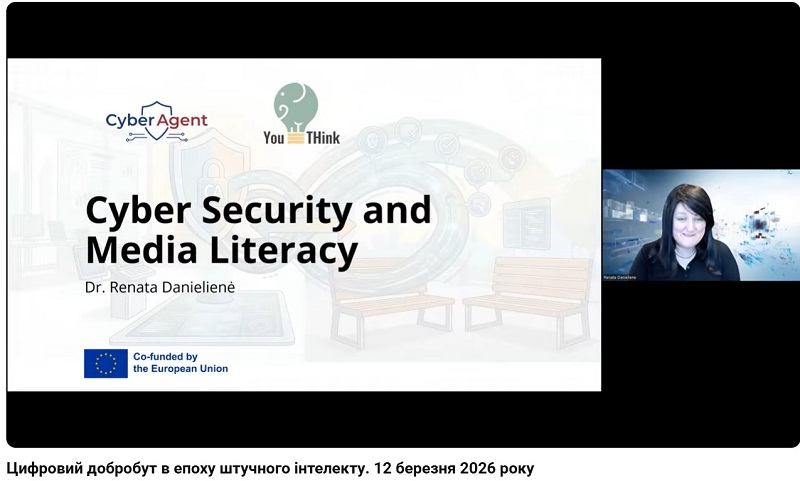
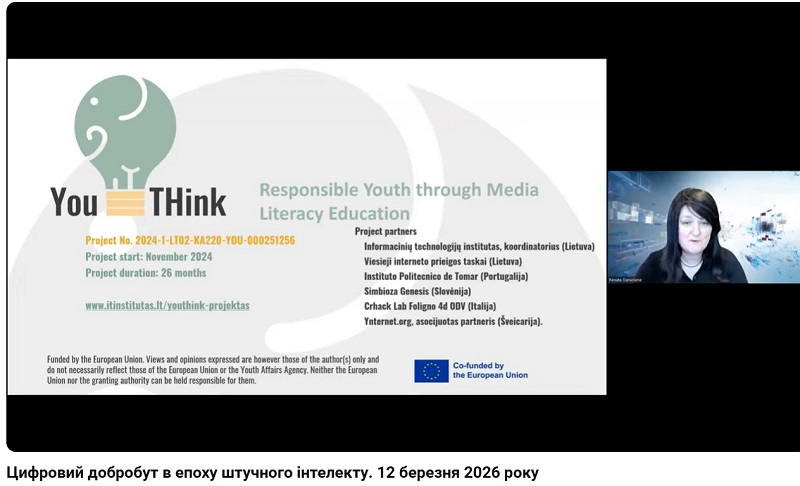
Renata Danieliene, Associate Professor at Vilnius University (Kaunas Faculty), Digital Champion for Lithuania, and CodeWeek Ambassador in Lithuania, presented two international projects implemented with the support of the Erasmus+ program.
The first one, "SMEs Cyber Security Change Agents" https://cyberagents.eu/about, is aimed at disseminating knowledge in the field of sustainable cybersecurity and developing entrepreneurial competencies. The main task of the CyberAgent project is to improve the qualifications of employees of small and medium-sized enterprises, particularly women, so they can become drivers of change in their organizations. The project provides them with the necessary skills and expertise to implement modern approaches to cybersecurity in the SME sector.
The second international project, YouTHink https://youthink.itinstitutas.lt/ (funded by Erasmus+ Cooperation in the care of Youth), is focused on building critical thinking and media literacy among young people aged 14–19. Its goal is not only to develop these competencies but also to strengthen the sense of social responsibility and the readiness of young people to actively participate in the life of the information society. In addition, the initiative involves creating methodological tools and conducting training for professionals working with youth to help them more effectively respond to the challenges of the modern media environment and working with information.
A special interactive part of the event was the AI quest "Digital Detective: Safe and Honest AI," which sparked great interest among the participants.
We sincerely thank the speakers, international partners, and participants for their insightful presentations, openness to dialogue, exchange of experience, and joint efforts in shaping a modern digital space. The NGO "Ukrainian Association of IT Professionals" is pleased to support initiatives that contribute to the development of digital culture, digital competencies, and international cooperation in the field of education.
Together, we are shaping digital well-being in the modern world!